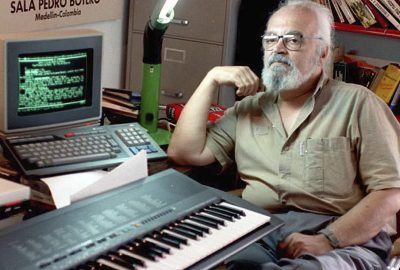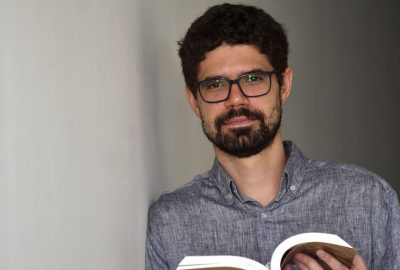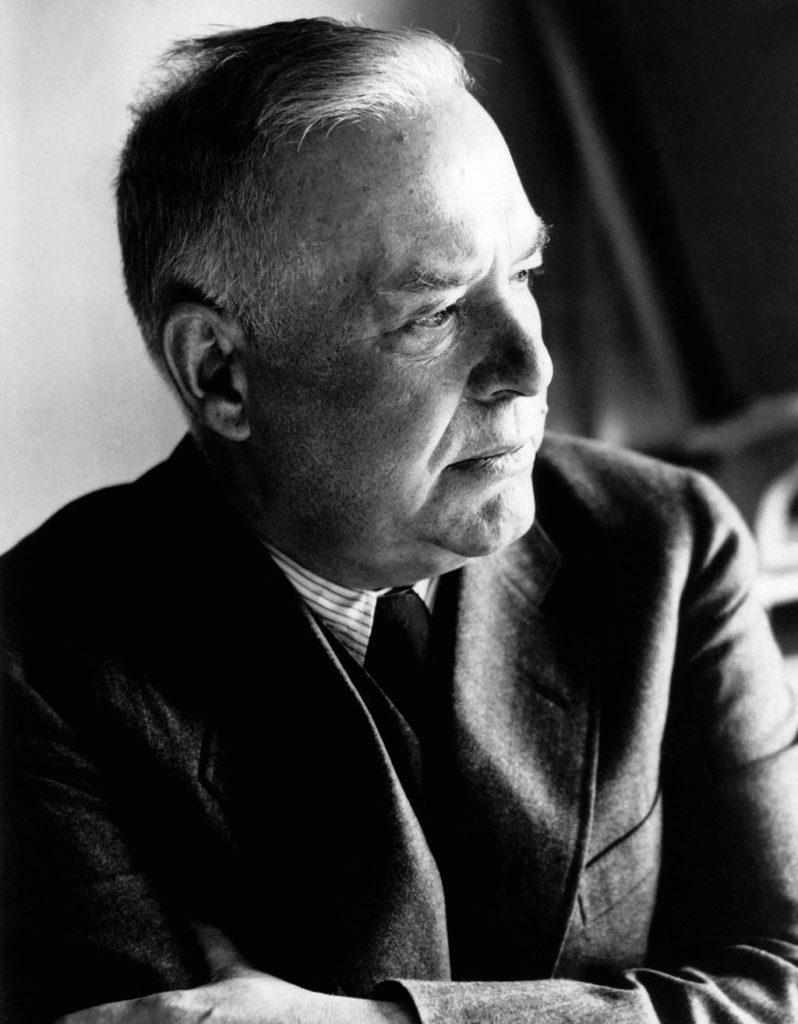
Tradução e seleção: Rodrigo Garcia Lopes
The snow man
One must have a mind of winter
To regard the frost and the boughs
Of the pine-trees crusted with snow;
And have been cold a long time
To behold the junipers shagged with ice,
The spruces rough in the distant glitter
Of the January sun; and not to think
Of any misery in the sound of the wind,
In the sound of a few leaves,
Which is the sound of the land
Full of the same wind
That is blowing in the same bare place
For the listener, who listens in the snow,
And, nothing himself, beholds
Nothing that is not there and the nothing that is.
O homem de neve
É preciso ter uma mente de inverno
Para captar a geada e os galhos
Dos pinheiros encrustados de neve;
E estar ao relento há muito tempo
Para ver os zimbros eriçados de gelo,
Os abetos ásperos no fulgor longínquo
Do sol de janeiro; e não pensar
Em nenhum pesar no som do vento,
No som de uma ou outra folha,
Que é o som da terra
Repleta do mesmo vento
Que sopra no mesmo ermo lugar
Para alguém que ouve, na neve,
E, sendo nada, contempla
O nada que não está ali e o nada que está.
…
The reader
All night I sat reading a book,
Sat reading as if in a book
Of sombre pages.
It was autumn and falling stars
Covered the shrivelled forms
Crouched in moonlight.
No lamp was burning as I read,
A voice was mumbling, “Everything
Falls back to coldness,
Even the musky muscadines,
The melons, the vermilion pears
Of the leafless garden.”
The sombre pages bore no print
Except the trace of burning stars
In the frosty heaven.
O leitor
A noite toda lendo um livro,
Como se dentro de um livro
De páginas sombrias.
Era outono e estrelas cadentes
Cobriam formas murchas
Agachadas ao luar.
Nenhuma luz ardia enquanto eu lia,
E uma voz murmurava: “Tudo
Ao frio retorna,
Mesmo as almiscaradas muscadíneas,
Os melões, as peras vermelhas
Do jardim sem folhas.”
Nada se lia nas páginas sombrias,
Só o rastro de estrelas em brasa
No céu glacial.
…
Re-statement of romance
The night knows nothing of the chants of night.
It is what it is as I am what I am:
And in perceiving this I best perceive myself
And you. Only we two may interchange
Each in the other what each has to give.
Only we two are one, not you and night,
Nor night and I, but you and I, alone,
So much alone, so deeply by ourselves,
So far beyond the casual solitudes,
That night is only the background of our selves,
Supremely true each to its separate self,
In the pale light that each upon the other throws.
Re-enunciado do romance
A noite nada sabe dos cantos da noite.
É o que é como sou o que sou:
E, percebendo isso, percebo melhor a mim
E a você. Só nós dois podemos trocar
Um no outro o que cada um tem a dar.
Só nós dois somos um, não você e a noite,
Nem a noite e eu, mas você e eu, a sós,
Tão a sós, tão profundamente nós mesmos,
Tão além das solidões casuais,
Que a noite é só o pano de fundo de nós,
Supremamente fiéis cada um a seu eu,
Na luz pálida que cada um projeta no outro.
…
Not ideas about the thing but the thing itself
At the earliest ending of winter,
In March, a scrawny cry from outside
Seemed like a sound in his mind.
He knew that he heard it,
A bird’s cry at daylight or before,
In the early March wind.
The sun was rising at six,
No longer a battered panache above snow…
It would have been outside.
It was not from the vast ventriloquism
Of sleep’s faded papier mâché…
The sun was coming from outside.
That scrawny cry — it was
A chorister whose c preceded the choir.
It was part of the colossal sun,
Surrounded by its choral rings,
Still far away. It was like
A new knowledge of reality.
Não ideias sobre a coisa mas a coisa em si
No fim precoce do inverno,
Em março, um grito raquítico lá fora
Parecia um som em sua mente.
Ele sabia que o ouvia,
Grito de pássaro, na aurora ou antes,
No vento precoce de março.
O sol nascia às seis, não mais
Um penacho surrado sobre a neve…
Teria sido lá fora.
Não vinha do vasto ventriloquismo
Do papel machê desbotado do sono…
O sol vinha de fora.
Aquele grito raquítico — era uma corista
Cujo C precedesse o coro,
Era parte do sol colossal,
Cingida de anéis de coral,
Longe ainda. Era como
Uma nova noção da realidade.
…
Of mere being
The palm at the end of the mind,
Beyond the last thought, rises
In the bronze decor,
A gold-feathered bird
Sings in the palm, without human meaning,
Without human feeling, a foreign song.
You know then that it is not the reason
That makes us happy or unhappy.
The bird sings. Its feathers shine.
The palm stands on the edge of space.
The wind moves slowly in the branches.
The bird’s fire-fangled feathers dangle down.
Do mero ser
A palmeira no fim da mente,
Além do último pensamento, paira
No cenário de bronze.
Um pássaro de penas de ouro
Canta na palmeira, sem sentido humano,
Sem sentimento humano, uma canção estrangeira.
Você então entende que não é a razão
Que nos faz felizes ou infelizes.
O pássaro canta. Suas penas brilham.
A palmeira desponta na orla do espaço.
O vento se move nos ramos sem pressa.
As penas esplêndidas do pássaro pendem.